Best Drunken Noodles Near Me for Delivery on Busy Nights

Some dinners are planned. Others happen in the fifteen-minute gap between wrapping up work, answering one last message, and realizing the fridge contains little more than a half-used lime and an optimistic bottle of sriracha. That is when a reliable plate of Drunken Noodle earns its place. It is fast, deeply satisfying, and built for the kind of hunger that comes from a day that ran longer than expected.
When people search for Drunken Noodles Near Me, they are usually not looking for a culinary lecture. They want something hot, savory, and sturdy enough to survive the trip from wok to doorstep. Still, not every delivery version lands the same way. Some arrive glossy and fragrant, with broad rice noodles that keep their chew and basil that still smells fresh when the lid comes off. Others show up greasy, clumped, or oddly sweet, tasting more like compromise than comfort.
That difference matters most on busy nights, because delivery is not just about flavor. It is about timing, packaging, portion balance, and whether the food still feels intentional once it has spent twenty or thirty minutes in transit. Drunken Noodle happens to be one of the better candidates for delivery, but only when the restaurant gets the fundamentals right.
Why Drunken Noodle works so well for delivery
A good Drunken Noodle has structural advantages. The noodles are wide and resilient, which gives them a better chance of holding texture than delicate vermicelli or thinner stir-fried noodles that can turn limp quickly. The sauce is usually concentrated rather than watery, so it clings instead of pooling at the bottom of the container. The usual combination of soy, chili, garlic, and holy basil or Thai basil creates a flavor profile that stays vivid even after a short delivery ride.
There is also the matter of weight. Drunken Noodle eats like a full meal. A typical takeout portion often lands somewhere between generous and excessive, depending on the restaurant, and that makes it attractive when you need one dish that can quiet serious hunger without a second order. If you add chicken, beef, tofu, or shrimp, it becomes even more practical.
The best versions also reheat better than many people expect. Rice noodles are never at their absolute peak after sitting in a container, but broad noodles tend to recover more gracefully than smaller, fragile shapes. If your dinner gets delayed because a meeting runs long or your kid’s practice ends late, Drunken Noodle usually gives you a wider margin for error than dishes that depend on crispness or delicate temperature contrast.
What separates a great delivery order from a disappointing one
A restaurant can make excellent food in-house and still struggle with delivery. That is not a contradiction. It is a packaging and workflow problem.
With Drunken Noodle, the first clue is how the noodles are cooked. If they are underdone, they arrive tough around the edges. If they are overdone, they form a dense block on the ride over. The sweet spot is a noodle with enough elasticity to absorb sauce without collapsing. In a dining room, that window may last several minutes. For delivery, the kitchen has to anticipate the carryover heat and steam inside a closed container. The places that do this well often have years of takeout volume behind them, even if they are not the flashiest spots in town.
Sauce balance matters just as much. Too little sauce and the dish dries out before it reaches you. Too much and the noodles stew themselves into softness. This is one reason local regulars tend to know exactly which place to trust on a rainy Thursday. They have already learned who can hit that balance consistently.
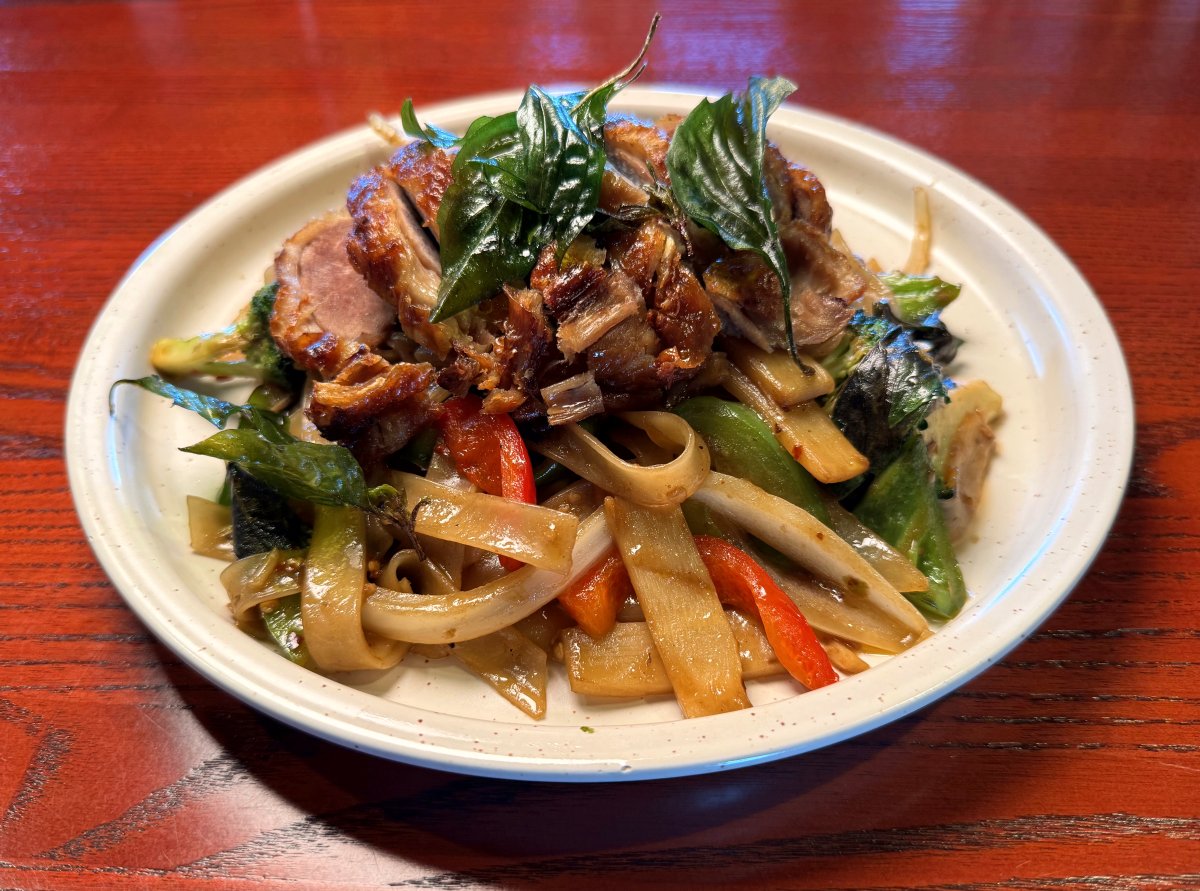
Vegetable cut and protein prep also tell a story. Bell peppers and onions should still have a little life in them. Basil should be visible and aromatic, not reduced to dark confetti. Chicken should be sliced for quick cooking rather than tossed in as thick, uneven chunks. Shrimp should not be curled into rubbery commas. Tofu should taste seasoned, not merely present.
The final piece is heat level. Some restaurants label spice generously and others cautiously. A medium at one Thai spot can feel like a mild at another, while a hot can leave even seasoned chili eaters reaching for iced tea. For delivery, I generally find that one step below your usual spice preference is the safer call if you are trying a place for the first time. Heat tends to concentrate as the dish sits, and a busy night is rarely improved by discovering the kitchen interpreted “extra spicy” as a personal challenge.
How to search smarter when you need Drunken Noodles fast
Typing Drunken Noodles Near Me into a delivery app is the easy part. Choosing well takes a little more judgment, especially if you are ordering from a new neighborhood, traveling, or facing a long list of options with nearly identical menu photos.
Start with the menu itself. Restaurants that take Thai cooking seriously usually offer enough context to suggest care. You may see the dish listed as pad kee mao, which is often a good sign because it signals familiarity with the traditional name rather than a purely generic translation. That alone does not guarantee quality, but it is often a useful hint.
Then look at the rest of the menu. A place that offers a coherent Thai lineup, with recognizable curries, stir-fries, soups, and noodle dishes, often performs more consistently than a broad pan-Asian menu that stretches from sushi to orange chicken to pho under one roof. There are exceptions, but on busy nights it is usually better to trust specialization over maximum variety.
Photos can help, though they need to be read carefully. You are not looking for studio lighting or impossible steam effects. You want visible basil, a dark savory sheen rather than a fluorescent orange sauce, and noodles that look distinct instead of mashed together. Customer photos are often more useful than promotional images because they show what actually arrives.
Reviews deserve a narrow focus. Instead of reading only the overall star rating, search within reviews for terms like “delivery,” “noodles,” “pad kee mao,” “fresh basil,” “portion,” or “packed well.” A restaurant with slightly lower overall ratings but repeated praise for noodle dishes can be a better bet than a general crowd favorite with inconsistent comments about takeout.
Here is the short checklist I use when I need to decide quickly:
- Look for pad kee mao or Drunken Noodle on a menu that is clearly Thai-focused.
- Check recent reviews for delivery comments, not just dine-in praise.
- Favor places within a reasonable radius so the noodles spend less time steaming in transit.
- Scan customer photos for wide noodles, basil, and balanced sauce.
- If trying a new spot, order one spice level lower than your usual preference.
That process takes less than five minutes once you get used to it, and it improves the odds of getting a dish that still tastes like someone cooked it for you, not at you.
The role of distance, traffic, and delivery timing
Food quality on delivery apps is often treated as if it depends only on the restaurant. In reality, geography matters more than people think.
A noodle dish traveling ten minutes has a much easier job than one traveling thirty. Even with excellent packaging, steam keeps working after the container is closed. The broader the noodles, the better they cope, but there are limits. If you are deciding between a well-reviewed Thai restaurant twenty-five minutes away and a very good one twelve minutes away, the closer option often wins on a weeknight. This is not lowering your standards. It is understanding how food behaves in motion.
Traffic changes the equation too. A restaurant that performs beautifully at 5:30 p.m. May be a risk at 7:00 p.m. On a Friday if drivers are juggling too many stacked orders. This is where timing can beat rating. Ordering slightly earlier than the peak dinner rush often produces a much better result than waiting until everyone in your area has the same idea.
Weather also matters. On cold nights, food loses heat faster, and noodles stiffen as they cool. On wet nights, delivery times stretch, which means the steam cycle inside the container runs longer. If I know bad weather is slowing traffic, I lean toward dishes with a bit more sauce and usually avoid add-ons that need to stay crisp.
What a strong Drunken Noodle should taste like
The name can create confusion. Drunken Noodle is not usually made with alcohol, and the flavor should not be sloppy or overpowering. The best versions are layered.
You should taste salt, sweetness, heat, and savory depth in a way that feels integrated rather than competitive. Garlic should read as fragrant, not harsh. Chili should build without drowning the rest of the dish. Basil should bring a peppery, slightly anise-like freshness that lifts the heavier notes. The noodles should be slick but not oily, coated but not submerged.
Texture matters as much as flavor. A strong delivery order still gives you contrast. The noodles stay chewy. Vegetables retain bite. Protein stays tender. If every component has merged into one soft, uniformly brown mass, the problem is rarely your appetite. It is execution.
One useful detail is how the dish handles a pause. Good Drunken Noodle still tastes deliberate if you take a few bites, answer the door, and come back five minutes later. Weak versions fade quickly. They become sticky, overly sweet, or strangely flat once the initial heat wears off.
Protein choices and how they change the meal
Protein is not an afterthought here. It affects texture, value, and the way the sauce reads.
Chicken is the safest all-around choice for delivery. It is affordable, common, and usually forgiving in a stir-fry if sliced properly. Beef can be excellent, especially with a darker, more savory sauce, but it requires better timing from the kitchen. Overcook it by a minute and the whole dish feels tighter and heavier. Shrimp brings sweetness and a lighter feel, though it has the narrowest margin for error in transit. Tofu can be outstanding, but only when the kitchen seasons it well and gives it some color before tossing it with the noodles.
On especially hectic nights, I often recommend choosing the protein the restaurant seems most likely to handle well, not the one that sounds most ambitious. A neighborhood Thai spot that moves a lot of chicken Drunken Noodle during lunch and dinner service may deliver that version with near-perfect consistency. Their seafood version might still be good, but consistency is what you are buying when you hit reorder.
If you eat family-style or split orders at home, it can make sense to pair one Drunken Noodle with another dish rather than doubling down on two noodle entrees. Curry and rice, a basil stir-fry, or a soup can create a more balanced spread. But if the goal is one efficient solo dinner that arrives fast and satisfies completely, Drunken Noodle with chicken or tofu is often the smartest move.
Packaging tells you whether a restaurant respects takeout
Restaurants that understand delivery make choices you can see the second you open the bag. The container is sturdy enough to hold heat without collapsing. Sauces are not leaking into the bottom. Garnishes are separated when they need to be. Utensils and napkins appear without your having to improvise with a measuring spoon from the drawer.
With Drunken Noodle specifically, container depth matters. A shallow box lets noodles spread out and cool too quickly. An overly deep container traps steam and compresses the lower half into a dense layer. The better setup is usually a medium-depth container that allows enough room for the dish to sit loosely.
Some restaurants vent hot foods slightly before sealing them. Others punch a small vent in the lid. Those small details can preserve texture better than a fancy logo ever will. If you notice a place consistently delivering noodles that arrive separated rather than compacted, you are seeing the result of a kitchen that has learned from experience.
Small customizations that actually help
Not every customization improves a delivery dish. Some do the opposite. Asking for “extra sauce” sounds useful, but in practice it can swamp the noodles unless the restaurant packs it on the side. Requesting maximum spice from an unfamiliar kitchen can bury the basil and make the whole plate taste one-dimensional. Swapping every vegetable to fit a preference can also disrupt cooking times and produce a less balanced result.
A few changes do tend to work well. If a place allows sauce on the side, that can help when delivery times run long. Asking for no bean sprouts if you dislike their softness after transit is reasonable. Requesting tofu extra crispy is worth trying, though success varies by kitchen.
The best customizations respect the logic of the dish. You want to support texture and balance, not redesign the recipe in the checkout notes. On busy nights, simple orders often get executed best.
How to tell if a place deserves repeat status
The first good order gets your attention. The third or fourth gets your loyalty.
A repeat-worthy Thai restaurant delivers more than a one-time craving fix. It gives you consistency. The noodles taste right across different nights. The spice level stays within a reliable range. The portions justify the price. The timing is close to what the app promised. If something goes wrong, it feels like the exception rather than the pattern.
I pay close attention to whether leftovers still eat well the next day. Drunken Noodle is not a crisp salad that disappears once dressed. It should have some second-life value. If a restaurant’s noodles can be revived in a skillet or microwave with a splash of water and still taste good at lunch, that is a practical point in its favor.
I also notice whether the dish has personality. Some versions are competent but anonymous. Others have a distinct hand, deeper char on the noodles, stronger basil aroma, sharper garlic, or a better sweet-savory balance. Those are the places people remember when they search Drunken Noodles Near Me the next time a long day gets away from them.
When the best option is not the highest rated one
This surprises people, but the highest rated restaurant on an app is not always the best source for your particular dinner. Ratings can reflect ambience, service, lunch specials, or a single breakout dish that has little to do with noodles. Delivery performance is its own category.
I have seen elegant Thai restaurants produce beautiful dine-in meals while their takeout noodles arrive packed too tightly and too late. I have also seen modest neighborhood spots with simpler branding turn out remarkably good Drunken Noodle because they understand volume, timing, and container behavior. If your priority is a dependable weeknight meal, that practical competence matters more than broad reputation.
Price should be read the same way. The most expensive option is not automatically the best, and the cheapest often cuts corners in portion quality or protein amount. There is usually a middle band where value and consistency meet. Over time, most regular customers find it without needing to think very hard about it.
Making the most of leftovers when the portion is large
Drunken Noodle often arrives in enough quantity for two lighter meals or one very hungry evening plus leftovers. To keep the second round from turning gummy, transfer it out of the original container if you can. A sealed takeout box holds moisture, which continues to soften the noodles overnight.
For reheating, a skillet with a spoonful of water is ideal because it loosens the sauce and restores some movement to the noodles. A microwave works fine in real life, especially on a busy lunch break, but cover the dish lightly and stir halfway through so the edges do not dry while the center stays cool.
If the basil has faded, a squeeze of lime or a few torn herbs from home can wake the dish up. That is not fixing a bad meal so much as refreshing a good one. Strong noodles should be able to take that treatment and still hold together.
The busy-night standard that matters most
There is a simple reason Drunken Noodle remains one of the smartest delivery orders around. It offers comfort without feeling heavy in the wrong way, bold flavor without requiring ceremony, and enough resilience to survive the messy realities of urban dinner logistics. When https://holdenezvl935.novacrestiq.com/posts/drunken-noodles-near-me-with-chicken-beef-or-tofu-what-to-order it is done well, it feels immediate and generous, even if you are eating from a takeout container at the edge of your desk.
The trick is not merely finding Thai food. It is finding the restaurant that understands this particular dish in transit. Search Drunken Noodles Near Me with a little more attention to distance, menu focus, reviews, and packaging clues, and your odds improve sharply. The reward is not abstract. It is a hot, basil-scented, deeply savory plate that arrives ready to rescue a night that got too busy to cook.
And on nights like that, a dependable Drunken Noodle is not just convenient. It is exactly the right kind of answer.
Nakhon Luang Thai Kitchen
Address: 805 Village Center Dr, Colorado Springs, CO 80919
Phone number: +17195315175
FAQ About Drunken Noodles Near Me
What makes it drunken noodles?
Drunken noodles, or Pad Kee Mao, get their name from the Thai word khi mao (meaning "drunkard"). They contain no alcohol. The name comes from the idea that the dish is a popular late-night meal to cure a hangover or a great food to eat with a cold beer.
What is the difference between pad see ew and drunken noodles?
While both Pad See Ew and Drunken Noodles use the same wide rice noodles, Pad See Ew is a mild, sweet-savory dish made with dark soy sauce and Chinese broccoli, whereas Drunken Noodles (Pad Kee Mao) are fiery, garlicky, and herbaceous with fresh chilies and Thai basil.
What are traditional drunken noodles?
Traditional drunken noodles, known as Pad Kee Mao in Thai, are a fiery, savory street food stir-fry made with wide flat rice noodles, fresh garlic, lots of hot chilies, meat or tofu, and fragrant holy basil. Despite the name, they contain no alcohol; the dish is traditionally eaten late at night or as a hangover cure because the intense spice helps clear the head.